New Evidence for Water Ice on the Moon
Recent lunar missions have provided new evidence for water ice on the Moon, particularly within permanently shadowed craters near the poles. This discovery has generated significant interest in the scientific community and among space exploration stakeholders. The presence of water ice on the Moon could have profound implications for future human missions and the potential for sustainable lunar habitats. Understanding the distribution and form of this ice is crucial for planning any long-term presence on the lunar surface.
Multiple missions, including remote sensing satellites and impact probes, have detected signatures of water ice in these cold traps. Permanently shadowed regions, where temperatures never rise above about -170 degrees Celsius, can preserve water ice for billions of years. The evidence comes from a combination of spectral data, neutron spectroscopy, and direct sampling from impactors. These findings have been corroborated by ground-based observations and theoretical models of ice stability.
This article examines the recent evidence for water ice on the Moon, the methods used to detect it, and the potential applications for human exploration. It also discusses the challenges associated with accessing and utilizing this resource, as well as the broader implications for lunar science and future missions.
Detection Methods and Recent Findings
The detection of water ice on the Moon has relied on a variety of remote sensing techniques and in-situ measurements. Spectral reflectance measurements from orbiters such as Chandrayaan-1 and the Lunar Reconnaissance Orbiter have identified absorption features consistent with water and hydroxyl molecules. Neutron spectrometers, like those on the Lunar Prospector and the Lunar Reconnaissance Orbiter, have mapped hydrogen concentrations that suggest the presence of water ice in polar regions. Additionally, the LCROSS mission impacted a permanently shadowed crater and detected water vapor and ice in the ejecta plume, providing direct evidence.
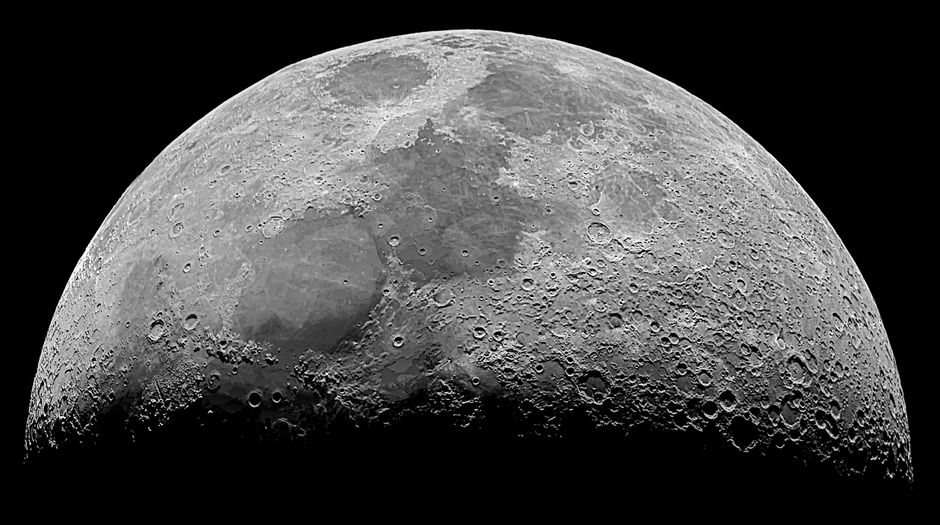
Recent analyses have refined our understanding of the distribution and concentration of water ice. For instance, data from the Stratospheric Observatory for Infrared Astronomy (SOFIA) detected water molecules in the Clavius Crater, one of the largest visible craters on the Moon, located in the southern hemisphere. This detection was surprising because the crater is not permanently shadowed, indicating that water may be present in sunlit regions as well, though in lower concentrations. Furthermore, the Lunar Reconnaissance Orbiter’s Lyman Alpha Mapping Project (LAMP) has provided evidence that water ice is more prevalent in shadowed regions than previously thought.
These findings are complemented by laboratory studies that simulate lunar conditions to understand how water ice can be trapped and preserved. The combination of remote sensing, direct sampling, and experimental work has built a robust case for the presence of water ice on the Moon. However, uncertainties remain regarding its exact form, purity, and accessibility.
Potential Applications for Human Exploration
Water ice on the Moon is a critical resource for future human exploration and habitation. It can be used for life support, providing drinking water and oxygen for breathing. Through electrolysis, water can be split into hydrogen and oxygen, which can serve as rocket propellant. This in-situ resource utilization (ISRU) could significantly reduce the cost and complexity of lunar missions by decreasing the need to transport water and fuel from Earth.
For example, water ice could be mined and processed to produce potable water, oxygen, and hydrogen. These products could support a sustained human presence on the Moon, enabling longer missions and the construction of lunar bases. Additionally, the hydrogen and oxygen could be used to refuel spacecraft, potentially turning the Moon into a staging point for deeper space exploration, such as missions to Mars.
“The discovery of water ice on the Moon opens up possibilities for sustainable exploration, but realizing these possibilities depends on further technological development and careful resource management.”
However, the extraction and processing of water ice present significant technical challenges. The extremely cold temperatures in permanently shadowed regions require specialized equipment that can operate in cryogenic conditions. The icy regolith may be mixed with other materials, requiring separation and purification. Moreover, the location of these resources in polar craters poses logistical challenges for landing and operations.
Challenges and Considerations
Accessing water ice on the Moon is not without difficulties. The permanently shadowed craters are among the coldest places in the solar system, with temperatures dropping below -200 degrees Celsius. Equipment must be designed to withstand these extremes, and power sources must be reliable. Solar power is not available in these shadowed regions, so nuclear power or other energy sources may be necessary. Furthermore, the terrain is rugged and poorly illuminated, making navigation and operations hazardous.
Another consideration is the legal and ethical framework governing lunar resource extraction. The Outer Space Treaty of 1967 prohibits national appropriation of celestial bodies, but the extraction and use of resources is a subject of ongoing debate. International cooperation and clear guidelines will be essential to ensure that lunar resources are used responsibly and for the benefit of all humanity.
Environmental impact is also a concern. Mining operations could alter the pristine lunar environment, potentially contaminating the ice deposits or affecting scientific research. Careful planning and monitoring will be required to minimize such impacts. Additionally, the sustainability of resource extraction depends on the scale of operations and the ability to recycle materials.
Future Missions and Research Directions
Several upcoming missions are planned to further investigate lunar water ice. NASA’s Artemis program aims to return humans to the Moon and establish a sustainable presence, with a focus on the lunar south pole where water ice is expected. The Volatiles Investigating Polar Exploration Rover (VIPER) will explore and characterize ice deposits, providing ground truth for remote sensing data. Other missions, such as those from international space agencies and commercial entities, are also targeting lunar polar regions.
Future research will focus on mapping the distribution of water ice with higher resolution, understanding its physical and chemical properties, and developing technologies for extraction and utilization. In-situ experiments and sample return missions will be crucial to validate remote sensing observations and to test processing techniques. Collaborative efforts between space agencies, academia, and industry will accelerate progress in this field.
As Cosmic Insights continues to monitor developments in lunar exploration, the evidence for water ice on the Moon represents a significant step forward in our understanding of the Moon’s resources and their potential to support human activities beyond Earth.