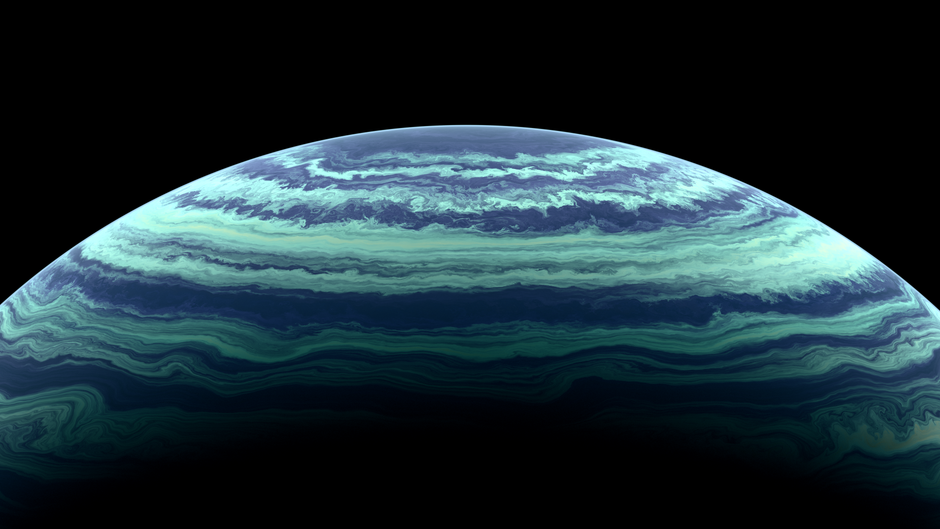
James Webb Telescope Finds Rocky Exoplanet Atmosphere
The James Webb Space Telescope (JWST) has provided a new analysis of the atmosphere of a rocky exoplanet, offering insights into its composition and potential habitability. This observation marks a significant step in characterizing the atmospheres of small, rocky worlds beyond our solar system. The data suggests the presence of a thin atmosphere containing carbon dioxide, a finding that could inform models of planetary formation and evolution.
Understanding the atmospheres of rocky exoplanets is a key goal in modern astronomy. Unlike gas giants, which have thick, hydrogen-dominated envelopes, rocky planets have thinner atmospheres that are more challenging to detect. The JWST’s advanced infrared capabilities enable detailed spectroscopic analysis, allowing scientists to identify molecules in these distant atmospheres. This particular exoplanet, designated as LHS 3844b, orbits a small red dwarf star about 48 light-years away. Its proximity and relatively large size compared to its star make it an ideal target for atmospheric study.
In this article, we explore the methodology behind the observation, the implications of the detected carbon dioxide, and the broader context of exoplanet atmospheric research. We also discuss the limitations and future directions of such studies. The findings contribute to our understanding of planetary diversity and the conditions that might support life elsewhere in the galaxy.
Observing a Rocky Exoplanet with JWST
The James Webb Space Telescope, a collaboration between NASA, the European Space Agency, and the Canadian Space Agency, was launched in December 2021 and began science operations in 2022. Its suite of instruments includes the Near-Infrared Spectrograph (NIRSpec) and the Mid-Infrared Instrument (MIRI), both of which are capable of analyzing the light from distant objects. To study the atmosphere of LHS 3844b, astronomers used the technique of transmission spectroscopy, which involves observing the planet as it passes in front of its host star. During these transits, a small fraction of starlight filters through the planet’s atmosphere, and the resulting spectrum can reveal the presence of specific molecules.
However, observing a rocky exoplanet’s atmosphere is particularly difficult because the signal is faint. The planet is much smaller than its star, and its atmosphere is thin. To overcome these challenges, the research team employed a method called eclipse photometry, where they measured the combined light of the star and planet just before and after the planet passed behind the star. By subtracting the star’s light, they isolated the planet’s thermal emission. This approach, combined with data from JWST’s MIRI instrument, allowed them to detect the subtle signature of carbon dioxide.
The observation required careful calibration and multiple transit events to reduce noise. The team also had to account for the star’s variability, which can mimic atmospheric signals. By using advanced data analysis techniques, they were able to confidently attribute the carbon dioxide detection to the planet’s atmosphere. This work exemplifies the collaborative and meticulous nature of exoplanet research, where international teams pool resources and expertise to push the boundaries of what is observable.
The Significance of Carbon Dioxide Detection
Carbon dioxide is a common molecule in planetary atmospheres, and its presence can provide clues about a planet’s formation and geological history. On Earth, carbon dioxide is a minor component of the atmosphere but plays a crucial role in the greenhouse effect and the carbon cycle. On a rocky exoplanet like LHS 3844b, the detection of carbon dioxide suggests that the planet has a secondary atmosphere, meaning it outgassed from the interior rather than being captured from the primordial nebula. This is in contrast to gas giants, which retain their primary hydrogen-helium atmospheres.
The thinness of the atmosphere is also notable. The data indicate that the atmosphere is not as dense as Venus’s, which is dominated by carbon dioxide, but not as thin as Mars’s, which has a very tenuous atmosphere. This intermediate state raises questions about the planet’s ability to retain volatiles and the role of stellar radiation in stripping atmospheres away. Red dwarf stars, like LHS 3844, are known for frequent flares and high levels of ultraviolet radiation, which can erode planetary atmospheres over time. The fact that LHS 3844b still has an atmosphere suggests that it may be replenished by volcanic activity or that the planet has a strong magnetic field shielding it from the worst of the stellar wind.
Furthermore, the detection of carbon dioxide does not necessarily imply the presence of life. While carbon dioxide is a prerequisite for photosynthesis on Earth, it can also be produced by abiotic processes such as carbonate rock formation and volcanic outgassing. Therefore, the finding should be interpreted with caution, and further observations are needed to determine whether other biosignature gases, such as oxygen or methane, are present.
Methodological Challenges and Limitations
Analyzing the atmospheres of rocky exoplanets is fraught with challenges. The signal from a thin atmosphere is often buried in the noise of the star’s own emission and the instrument’s background. Moreover, the star’s activity can produce false positives, mimicking the absorption features of molecules. To mitigate these issues, astronomers must observe multiple transits and use sophisticated statistical methods to separate the planetary signal from stellar contamination.
Another limitation is the current generation of telescopes. While JWST is the most powerful space telescope ever built, it has its limits. The resolution and sensitivity of its instruments are finite, and observing very small planets around faint stars requires long integration times. Future observatories, such as the Nancy Grace Roman Space Telescope and the European Extremely Large Telescope, may provide complementary data and improve our ability to characterize rocky exoplanet atmospheres.
Additionally, the interpretation of spectral data relies on models of atmospheric physics and chemistry. These models are based on our understanding of Earth and other solar system planets, but they may not fully capture the diversity of exoplanetary environments. Therefore, the detection of carbon dioxide should be considered within a broader framework of planetary science, where multiple lines of evidence are used to build a coherent picture.
Implications for Exoplanet Science and Future Research
The detection of a thin carbon dioxide atmosphere on LHS 3844b adds to the growing inventory of known exoplanet atmospheres. It demonstrates that JWST can probe the atmospheres of rocky worlds, opening the door to comparative studies. By analyzing a larger sample of rocky exoplanets, scientists can begin to identify patterns and correlations between atmospheric composition and planetary properties such as mass, radius, and orbital distance.
This research also has implications for the search for habitable worlds. While LHS 3844b is likely too hot to support life as we know it, the techniques developed here can be applied to cooler rocky planets in the habitable zones of their stars. The presence of carbon dioxide in a habitable zone planet’s atmosphere could indicate a stable climate and the potential for liquid water. However, detecting such signals will require even greater sensitivity and longer observation times.
Moreover, the study highlights the importance of theoretical work in tandem with observations. As data accumulate, models of atmospheric escape, volcanic outgassing, and climate dynamics will need to be refined to explain the observed diversity. This iterative process of observation and theory is fundamental to the advancement of exoplanet science.
Conclusion
The James Webb Space Telescope’s analysis of the rocky exoplanet LHS 3844b has yielded evidence of a thin atmosphere containing carbon dioxide. This finding, while not definitive proof of habitability, represents a significant achievement in the field of exoplanet characterization. It underscores the capabilities of JWST and the power of collaborative, international research. As we look to the future, continued observations and technological advancements will undoubtedly reveal more about the nature of rocky worlds beyond our solar system.
Cosmic Insights remains committed to providing accurate and insightful coverage of astronomical discoveries. By disseminating these findings, we aim to foster a deeper appreciation for the scientific process and the mysteries of the universe. The study of exoplanet atmospheres is a rapidly evolving field, and each new observation brings us closer to understanding our place in the cosmos.